
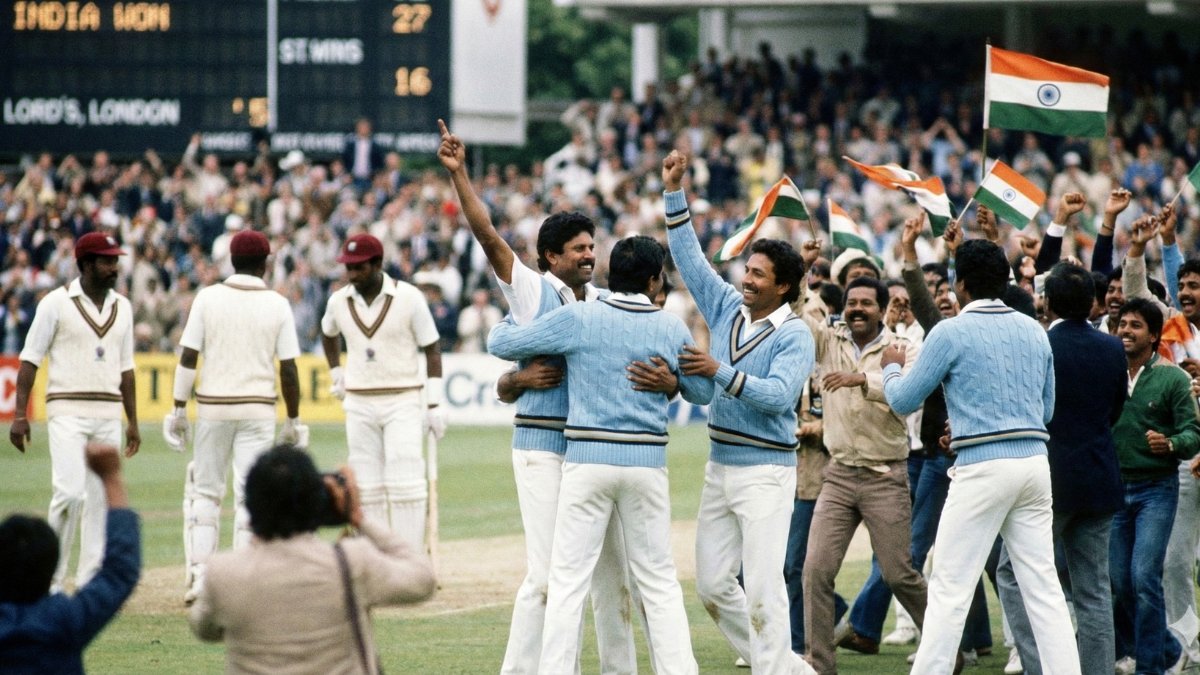
The 1983 Cricket World Cup Final is widely regarded as one of the most transformative moments in the history of cricket. On 25 June 1983, at the iconic Lord’s Cricket Ground, a relatively inexperienced Indian team defeated the mighty West Indies, a side that had dominated world cricket for nearly a decade.
This was not just a cricket match. It was an upset that redefined global perceptions of Indian cricket and laid the foundation for India’s rise as a cricketing powerhouse. What made this victory extraordinary was not only the result, but the context — India were overwhelming underdogs, while the West Indies were two-time defending champions packed with legendary players.
This article explores how India shocked the world in the 1983 World Cup Final, examining the build-up, the match itself, and the lasting impact of this historic triumph.
World Cricket Before 1983: A One-Sided Story
Before 1983, world cricket was dominated by a few traditional powers. The West Indies, in particular, were considered almost unbeatable in limited-overs cricket.
West Indies’ Dominance
- Winners of the 1975 and 1979 World Cups
- Fearsome pace attack
- Explosive batting lineup
- Supreme confidence on the world stage
They were expected to win the 1983 World Cup comfortably, with many experts predicting another one-sided final.
India’s Position
In contrast, India were seen as outsiders:
- Limited success in international cricket
- Poor World Cup record before 1983
- Rarely considered contenders in overseas conditions
Few believed India could even reach the final, let alone defeat the West Indies.
India’s Journey to the Final
India’s road to the final was filled with surprises and turning points.
Group Stage Performance
India were grouped alongside strong teams, including the West Indies themselves. Early expectations were modest, but India quickly showed resilience and belief.
One of the defining moments of the tournament was Kapil Dev’s unbeaten 175 against Zimbabwe, an innings that rescued India from near elimination and kept their World Cup hopes alive.
Semifinal Victory
India faced England in the semifinal. Playing with discipline and confidence, India secured a convincing win, earning a place in the final — a result that shocked many observers.
By the time India reached Lord’s for the final, they had already exceeded expectations. But the biggest challenge still lay ahead.
The Final at Lord’s: Setting the Stage
Date and Venue
- Date: 25 June 1983
- Venue: Lord’s Cricket Ground, London
Conditions
- Overcast weather
- Swing-friendly pitch
- Pressure of a global audience
The toss was crucial, and India were put in to bat first by the West Indies, a decision that seemed logical given their strong bowling attack.
India’s Innings: Grit Over Glamour
India’s batting lineup faced immense pressure against a powerful West Indian bowling unit.
Early Setbacks
India lost wickets at regular intervals and never truly dominated the bowling. There were no massive partnerships or flashy shots — just determination and survival.
Key Contributions
- Steady middle-order resistance
- Sensible shot selection
- Focus on building a defendable total
India were bowled out for 183 runs, a modest score even by 1983 standards. Most experts felt this total would not be enough to challenge the West Indies.
Yet, the Indian players believed otherwise.
West Indies’ Chase: Confidence Turns to Complacency
Chasing 184, the West Indies appeared comfortable. Their batting lineup included world-class players accustomed to high-pressure situations.
Early Breakthroughs
India’s bowlers struck early, creating uncertainty. Tight bowling and sharp fielding applied pressure from the outset.
The Turning Point
One of the most iconic moments in cricket history came when Kapil Dev took a stunning running catch to dismiss Vivian Richards. That single moment shifted momentum dramatically.
Richards was the backbone of the West Indies chase, and his dismissal opened the door for India.
India’s Bowling and Fielding: A Collective Effort
Unlike the star-studded West Indies side, India relied on teamwork.
Bowling Discipline
- Consistent line and length
- Use of swing and seam
- Smart field placements
Exceptional Fielding
India’s fielding in the final was exceptional by the standards of the time. Every run was contested, every chance was taken seriously.
Gradually, the West Indies lost wickets and confidence.
The Final Moments: History in the Making
As wickets continued to fall, the realization grew — the impossible was becoming possible.
When the final West Indies wicket fell, India had completed one of the greatest upsets in sports history.
Final Result
- India: 183 all out
- West Indies: 140 all out
- India won by 43 runs
At Lord’s, under grey English skies, India were crowned World Champions for the first time.
Immediate Reactions: A World in Shock
The cricketing world was stunned.
Global Reaction
- Experts struggled to explain the defeat
- Fans worldwide witnessed a new cricketing force
- India earned respect on the global stage
Indian Celebration
Back home, celebrations were unprecedented:
- Streets filled with fans
- Cricket became a national obsession
- Players were hailed as heroes
The victory united the country and transformed cricket’s cultural status in India.
Long-Term Impact on Indian Cricket
The 1983 World Cup win was not just a trophy — it was a turning point.
Rise of Cricket as a National Sport
- Increased popularity across regions
- Greater youth participation
- Growth of domestic cricket structure
Financial and Commercial Growth
- Sponsorship interest increased
- Better infrastructure development
- Television viewership expanded rapidly
This victory laid the groundwork for India’s future dominance, including the rise of professional leagues and stronger international performances.
Impact on World Cricket
India’s triumph also changed world cricket.
Breaking the Monopoly
- Ended West Indies’ dominance
- Proved that disciplined teamwork could beat star power
Inspiration for Emerging Teams
India’s win inspired other nations to believe that traditional powers could be challenged in global tournaments.
Why the 1983 Final Still Matters Today
Even decades later, the 1983 World Cup Final remains relevant.
- It represents belief over reputation
- Team effort over individual brilliance
- Strategy and discipline over raw power
Every major Indian cricket success traces its roots back to that day at Lord’s.
Conclusion
The 1983 World Cup Final was more than a cricket match — it was a moment that reshaped the sport’s history. By defeating the mighty West Indies, India shocked the world and announced its arrival on the global stage.
That victory changed how India saw itself in cricket and how the world viewed Indian teams. It remains a timeless reminder that in sport, belief, preparation, and unity can overcome even the greatest odds.