
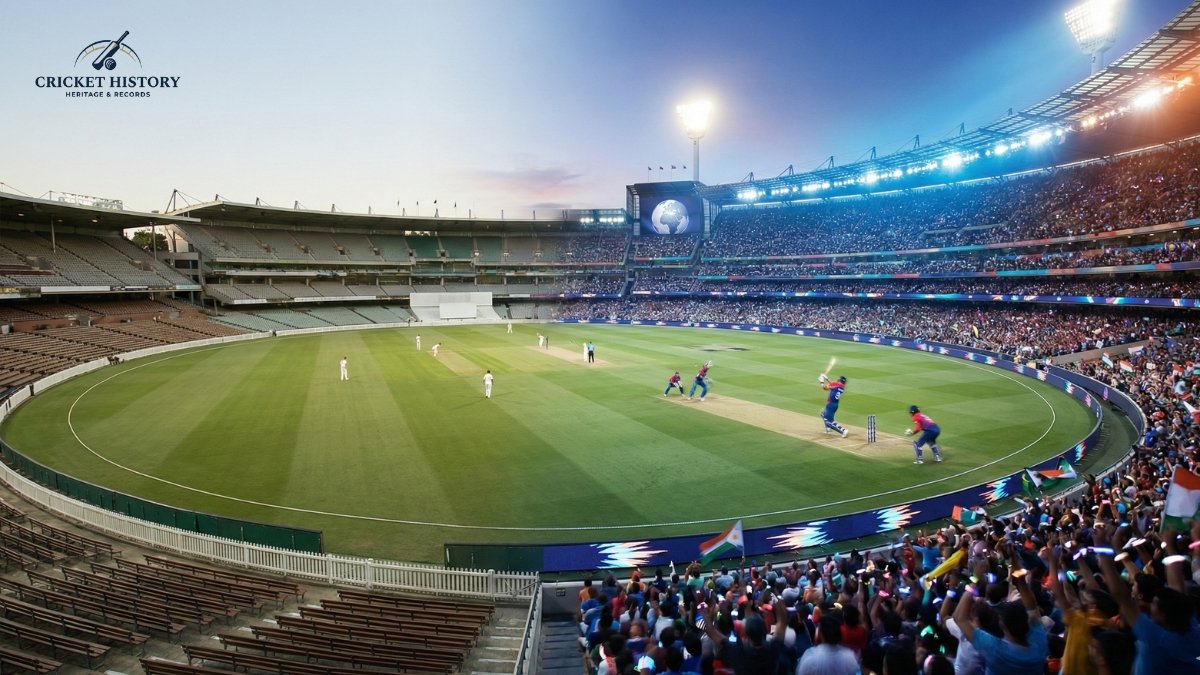
The launch of the Indian Premier League (IPL) in 2008 marked one of the most revolutionary moments in cricket history. What started as a bold experiment by the Board of Control for Cricket in India (BCCI) soon became the most influential cricket league in the world.
The IPL did not merely popularize T20 cricket it changed how cricket is played, watched, managed, and monetized. From redefining player careers to reshaping global cricket economics, the IPL’s impact extends far beyond India. This article explores the history of the IPL and explains how the league changed world cricket forever.
Cricket Before the IPL Era
Before the IPL, international cricket matches controlled almost every aspect of the game. A player’s career was heavily dependent on national selection, and financial security was limited to a small group of established cricket stars. Domestic cricket existed, but it rarely provided fame, global exposure, or substantial income.
Limited-overs cricket was popular, but it had not yet evolved into a powerful commercial product. T20 cricket itself was still considered experimental, and few believed it could become cricket’s most influential format. Cricket was respected, but it was not yet optimized for the modern entertainment economy.
The Birth of the IPL
The turning point came after India’s victory in the 2007 ICC T20 World Cup. That triumph demonstrated the commercial and entertainment potential of short-format cricket when combined with prime-time scheduling and aggressive marketing.
The Board of Control for Cricket in India (BCCI) seized the moment and launched the IPL in 2008. Unlike traditional tournaments, the IPL introduced privately owned franchises, player auctions, night matches, and city-based loyalties.
The first IPL season exceeded expectations. Packed stadiums, high television ratings, and global attention proved that cricket could thrive as a league-based spectacle without losing its competitive edge.
A New Franchise-Based Cricket Economy
One of the IPL’s most revolutionary contributions was the franchise model. Teams were no longer national representatives but long-term brands with commercial objectives, fan engagement strategies, and financial planning.
This model introduced corporate professionalism into cricket. Owners invested in marketing, infrastructure, data analysis, and fan experience. Teams focused not only on winning matches but on building identities that fans could emotionally connect with. As a result, cricket teams became year-round brands rather than seasonal sporting units.
Player Auctions and the Financial Transformation of Cricket
Perhaps no aspect of the IPL changed world cricket more dramatically than the player auction system. For the first time, cricketers from around the world were valued openly in a competitive marketplace.
This fundamentally shifted the power structure of the sport. Players gained financial independence and negotiating power, while domestic cricketers, especially in India and found opportunities that had never existed before.
The IPL proved that talent, adaptability, and performance could be rewarded regardless of nationality. This economic shift forced cricket boards worldwide to rethink how players were compensated and retained.
The IPL as a Talent Development Engine
Beyond money and glamour, the IPL became one of the most effective talent-development platforms in cricket history. Young players were suddenly exposed to elite competition at an early stage of their careers.
Sharing dressing rooms with international stars accelerated learning in a way domestic tournaments never could. Young cricketers gained confidence, tactical awareness, and mental resilience by performing under intense pressure in front of massive audiences.
Over time, the IPL began producing players who were not only technically skilled but also mentally prepared for international cricket.
Tactical Evolution of the Game
The IPL did not just change who played cricket—it changed how cricket was played. The league became a laboratory for innovation, where teams experimented with aggressive strategies, unconventional roles, and data-driven decision-making.
Batting approaches evolved rapidly, with an emphasis on intent from the very first over. Bowlers adapted by developing variations, while captains relied increasingly on analytics to exploit match-ups.
Many of these tactical innovations later became standard practice in international cricket, especially in limited-overs formats.
Another lasting impact of the IPL was the dramatic improvement in fielding and fitness standards. Franchise teams invested heavily in athletic training, injury prevention, and recovery science.
As a result, fielding transformed from a supporting skill into a decisive factor. Athletic saves, sharp catching, and quick ground coverage became expected rather than exceptional. International teams soon followed, raising overall standards across the cricketing world.
Globalization of Cricket Through the IPL
The IPL brought together players from different cultures, playing styles, and cricketing philosophies. This environment fostered knowledge exchange and mutual respect among players from traditional and emerging cricket nations.
International players returned home with enhanced skills, professional habits, and tactical insights. This cross-pollination elevated the quality of cricket globally and reduced the performance gap between teams. In this sense, the IPL acted as an unofficial global academy for modern cricket.
Commercial Growth and Sponsorship Boom
The IPL’s commercial success set new benchmarks.
Financial Impact
- Record-breaking media rights deals
- Massive sponsorship investments
- Growth of cricket as a global business
This financial model inspired cricket boards worldwide to rethink their domestic structures and revenue strategies
Impact on International Cricket
TAs the IPL grew, international cricket had to adapt. Schedules were adjusted, player workloads were monitored more carefully, and national boards had to balance tradition with commercial realities.
While debates continue about prioritizing leagues versus international commitments, there is no denying that the IPL forced cricket’s governing structures to modernize. The sport became more player-centric, commercially aware, and strategically planned
Criticism and Challenges
Despite its success, the IPL has faced criticism. Concerns about player fatigue, commercialization, and the declining prominence of Test cricket are often raised.
However, the league has shown an ability to evolve. Regulations, scheduling reforms, and workload management strategies continue to develop in response to these challenges. Rather than replacing traditional cricket, the IPL has compelled the sport to find a sustainable balance between heritage and innovation.
IPL’s Influence on Other Leagues
The IPL’s success inspired similar leagues worldwide.
Global Influence
- Franchise-based T20 leagues in multiple countries
- Auction-style player recruitment
- Greater focus on fan engagement
While no league has matched the IPL’s scale, its blueprint has become the global standard.
The Long-Term Legacy of the IPL
Today, the IPL stands as the most influential cricket league ever created. Its impact can be seen in how players train, how teams strategize, how fans engage with the sport, and how cricket is financed globally.
The IPL did not merely change cricket, it accelerated its transition into a modern, global entertainment industry while preserving competitive excellence.
Conclusion
The Indian Premier League (IPL) began as an ambitious experiment, but it evolved into a defining force in modern cricket. It transformed the sport’s economics, accelerated tactical innovation, created new pathways for talent, and expanded cricket’s global audience.
More importantly, the IPL proved that tradition and modernity can coexist. While Test cricket continues to represent the game’s heritage, leagues like the IPL have ensured cricket’s relevance in a fast-changing world.
As the sport moves forward, the influence of the IPL will remain deeply embedded in how cricket is played, managed, and experienced worldwide. Few tournaments have altered the course of a sport so profoundly and the IPL stands firmly among them.