
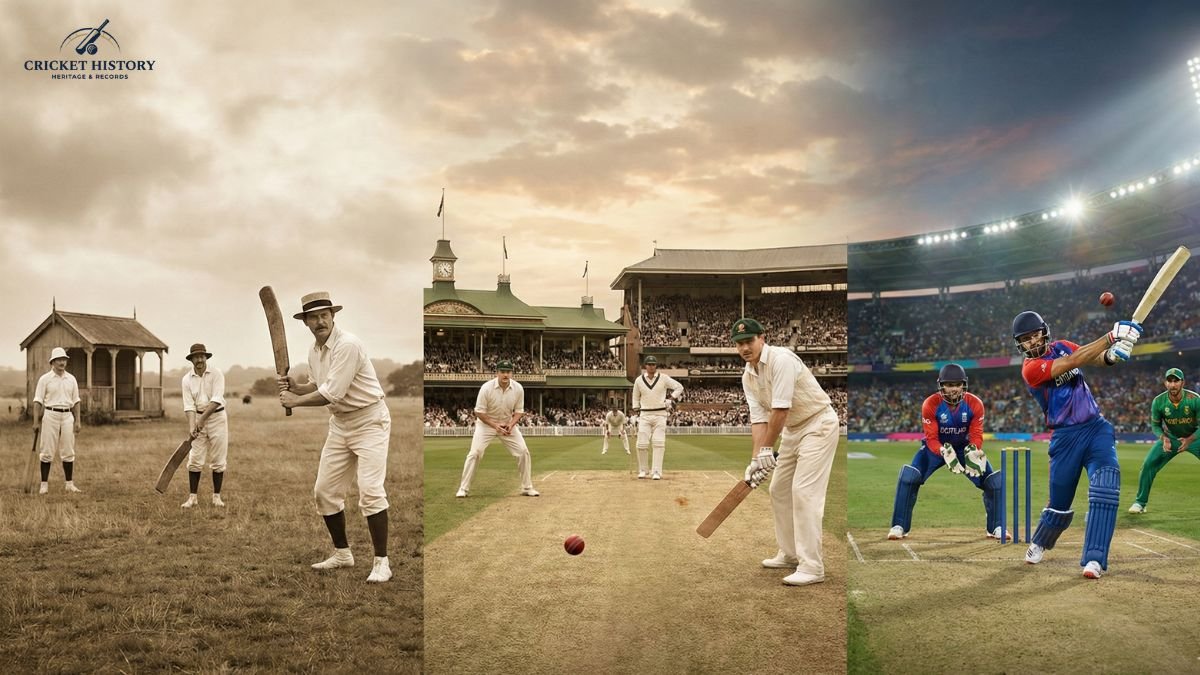
Cricket is one of the most popular sports in the world today, followed by millions of fans across different continents. From packed stadiums in India to historic grounds in England and Australia, cricket has evolved into a global phenomenon. However, the journey of cricket from a simple local game to an international sport is long and fascinating.
This blog explores the history of cricket, tracing its origins, major transformations, and how it became the modern sport we know today.
Origins of Cricket
The origins of cricket can be traced back to 16th-century England. It is believed that cricket started as a children’s game played in rural areas of southern England. Over time, adults began playing the game, and its popularity gradually increased.
The earliest written reference to cricket dates back to 1598, when the game was mentioned in a legal document. At this stage, cricket had no standardized rules and was played in different forms across regions.
Development of Cricket Rules
The 18th century marked a major turning point in cricket’s history. As the game became more organized, the need for standard rules emerged.
In 1744, the first known Laws of Cricket were written. Later, the Marylebone Cricket Club (MCC) became the custodian of cricket laws, a role it continues to play today.
Important developments during this period included:
- Standardized bat and ball sizes
- Fixed pitch length
- Introduction of umpiring rules
- Evolution of bowling techniques
These changes helped transform cricket into a structured and competitive sport.
Birth of International Cricket
Cricket began spreading beyond England due to the expansion of the British Empire. Countries like Australia, India, South Africa, and the West Indies adopted the game, leading to the birth of international cricket.
First International Match
- 1844: USA vs Canada
This is considered the first international cricket match.
First Test Match
- 1877: England vs Australia at Melbourne
This match marked the beginning of Test cricket, the longest and most traditional format of the game.
Growth of Test Cricket
Test cricket became the ultimate test of skill, patience, and endurance. Played over five days, it demanded technical excellence and mental strength from players.
Over time, more countries joined Test cricket, and historic rivalries such as The Ashes emerged. Test cricket laid the foundation for cricket’s traditions and values.
Growth of Cricket in India
The beginning of Cricket in India began during the British Period, and originally it was primarily an elite game for British expatriates that later became extremely popular among Native Indians, to whom it eventually became a national pastime.
Key milestones in Indian cricket history:
- 1932: India played its first Test match
- 1952: First Test victory
- 1983: India won the Cricket World Cup
The Indian victory in the 1983 Cricket World Cup was a major turning point that turned cricket into a National Passion in India, inspiring generations to come.
Introduction of One Day Internationals (ODIs)
In the 1970s, cricket introduced a shorter format known as One Day Internationals (ODIs). Each team played a fixed number of overs, making matches more result-oriented and spectator-friendly.
The first Cricket World Cup was held in 1975, which further boosted cricket’s global appeal.
ODIs brought:
- Faster gameplay
- Increased television viewership
- Commercial growth
The T20 Revolution
The biggest transformation in modern cricket began in the early 2000s with the introduction of T20 cricket. Designed to last only around three hours, the format brought speed, excitement, and entertainment to a sport traditionally associated with long durations. This shorter format attracted a younger audience and expanded cricket’s global appeal beyond its traditional fan base.
T20 cricket fundamentally changed how the game is played. Batters adopted aggressive, innovative shot-making from the very first over, bowlers were forced to develop variations to survive under pressure, and fielding standards rose dramatically as athleticism became a decisive factor. The format redefined expectations, turning intent, adaptability, and entertainment into core elements of modern cricket.
Franchise Cricket and the IPL
The launch of the Indian Premier League in 2008 marked a turning point in cricket’s evolution. Franchise-based leagues introduced a completely new ecosystem where cricket merged with entertainment, business, and global branding. City-based teams, player auctions, and international stars competing together reshaped how fans connected with the sport.
The IPL’s impact extended far beyond India. It significantly improved player earnings, provided a global platform for young and emerging talent, and transformed fan engagement through modern broadcasting and digital reach. Inspired by its success, similar franchise leagues soon emerged around the world, collectively shaping the modern cricket economy and altering the sport’s global structure.
Impact of IPL:
- Increased player earnings
- Platform for young talent
- Global fan engagement
- Commercial growth of cricket
Similar leagues soon emerged worldwide, shaping the modern cricket ecosystem.
Modern Era of Cricket
TCricket in the modern era is defined by professionalism, preparation, and precision. Advances in technology have transformed decision-making through tools such as ball-tracking, performance analysis, and real-time data insights. Teams now rely heavily on analytics to shape strategies, manage workloads, and gain competitive advantages.
At the same time, fitness and athletic standards have reached unprecedented levels, making agility and endurance as important as technical skill. Today, all three formats—Test cricket, One Day Internationals, and T20s—coexist successfully, each catering to a different audience while contributing to cricket’s rich and evolving landscape.
Conclusion
The history of cricket is a journey of evolution, innovation, and passion. From village fields in England to packed stadiums across the world, cricket has continuously adapted while preserving its spirit.
Cricket’s past helps us understand its present and appreciate why it remains one of the most beloved sports globally.